


At present, our plans for the remainder of this week include:
Thursday, October 29: David Rosenberg answers the urgent question: Are Israelis actually leaving the country? He unpacks the data and looks toward the future.
Friday, October 30: I plan to share my reactions to the election results—what they mean for Israel, and what they mean for those of us who love this country with every fiber of our being. (If the numbers aren’t final on Friday, we may delay this until Sunday…)

For years now, Shalem College has run a program called “The Israeli Story.” As part of it, our students read a significant Israeli novel, and we bring the author to campus to speak—typically in an interview conducted by one of our students.
In January 2020, just weeks before Covid would shut us down for a long time, we invited David Grossman to campus to speak about his masterwork, To the End of the Land.
The plot revolves around an Israeli mother named Ora, who is devastated when her younger son, Ofer, voluntarily re-enlists for a dangerous military offensive just as his mandatory service ends. Consumed by a desperate form of magical thinking, Ora believes that if she remains on the move and out of reach, military casualty notifiers will be unable to find her to deliver news of his death. Fleeing her home, she recruits Avram—a former lover, estranged friend, and Ofer’s biological father, who remains deeply traumatized after being tortured as a prisoner of war during the 1973 Yom Kippur War—to join her on a grueling trek through the Galilee. As they hike the northern trails, Ora incessantly recounts the story of Ofer’s life from birth through adolescence, weaving a continuous narrative shield designed to preserve her son’s existence and ward off the tragedy she fears most.
Grossman wrote much of the novel while his own son, Uri, was serving in the military. During the final stages of writing, Uri was killed in combat during the 2006 Second Lebanon War. The book is widely read through this haunting biographical lens—as an author’s attempt to ward off grief that ultimately transformed into a monumental work of art and a devastating indictment of endless war.
All our students, of course, were painfully aware of this backstory.
When I was researching my biography of Menachem Begin, I came across several accounts noting that whenever Begin—widely considered the most eloquent and fiery speaker in government—was scheduled to speak, the Knesset plenum would pack to capacity. It filled not just with MKs, but with staff at all levels, everyone eager to hear an orator the likes of whom they knew they might never hear again. There was rarely a single spare seat to be found.
So it was on the day Grossman came to Shalem. Word had spread among faculty and staff, and the room was beyond jammed. Students, faculty, staff—everyone who could possibly be there came.
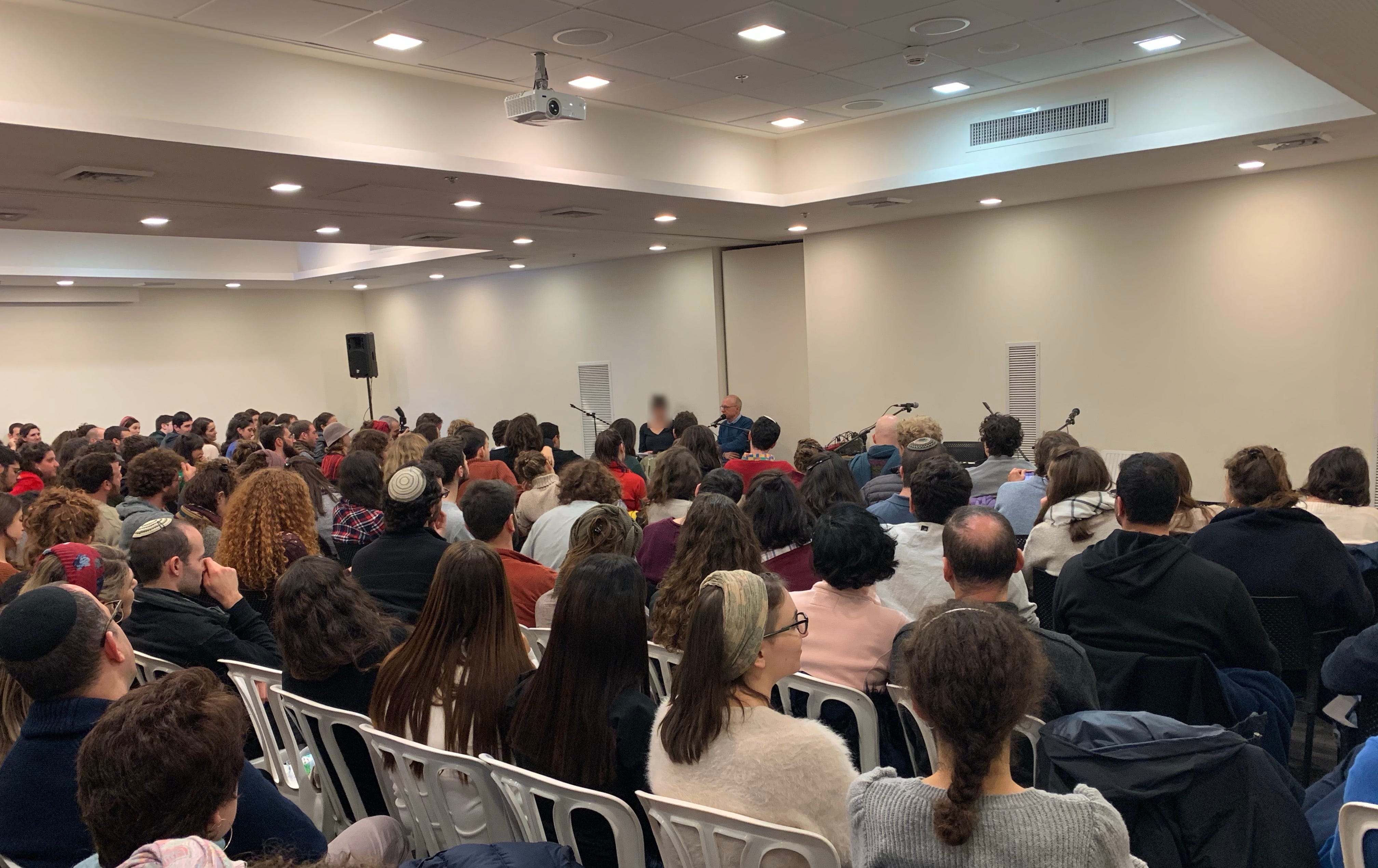
Grossman was interviewed by a stellar student who, at a certain point in the conversation, asked him, in essence: “If you didn’t live in Israel, your son would still be alive. Do you regret staying here?” She asked her question in the most reverential tone imaginable, with great tact and gentleness; but still, it was a punch to the gut. The room fell completely silent—it seemed as if people had stopped breathing. A few students, I still recall, began wiping tears from their eyes even before Grossman began to respond.
I thought of that conversation once again last week, when I had coffee with that student, who has long since graduated. We met to talk about a project she’s working on to bring hope to Israeli society and to memorialize her brother, who fell in battle on October 7. His funeral, held the following day, was the first funeral of the war that I attended. It was the first of more funerals than I can count, but I remember it as if it were yesterday.
Even then, during the funeral, I asked myself: how tragically Israeli is it that a student chosen simply for her eloquence would interview David Grossman about this agonizing question, only to later find her own family suffering a very similar loss?
Is there no escape?
As we chatted over coffee, she told me that after his visit to Shalem, David Grossman reached out to her. She didn’t share the content of his email, and I, of course, didn’t ask—though I assume he wrote because he was so moved by her. All she said was, “I knew that from that day, when David Grossman wrote to me, my life would be downhill from there.” And she laughed.
But it was a laugh tinged with terrible, terrible pain—and I suspect I’ll also remember that conversation, which was supposed to be a casual chat over coffee, for a long, long time.
This week—and especially today, the day after elections, when so many people are feeling disappointed or anxious—seemed like the right time to share this video once again. I shared it years ago on Israel from the Inside, but many new readers and listeners have joined us since. Could there be a more poignant day to hear one of Israel’s greatest talents speak about why, despite everything, there is nowhere else he could call home?
Here is Grossman’s full answer to her question:


