

If you aren’t familiar with the work of Ziv Koren—one of Israel’s finest photojournalists—today is the day to discover it.
Ziv Koren has been a professional photojournalist for over 30 years. Today, Koren represents Polaris Images photo agency worldwide and works for the Israeli daily Yedioth Ahronoth. He serves as director of education at Travelog photography school, an ambassador for Canson fine art paper, for Think-Tank Photo brand, and as an advisor for Canon Israel.
In the last three decades Koren covered some of the most dramatic events in the world and is considered to be one of the leading documentary photographers in our time. In addition, he has documented the Israeli Defence Forces and Elite Counter-Terror units.
On October 7, 2023, Koren was one of the first photographers to set out to the south of Israel to document the brutal attack of Hamas, the daily horrors and the war that followed. This documentary work has exhibited in dozens of cities worldwide and was edited into an encompassing book, contributing to the Israeli advocacy.
Ziv Koren’s website
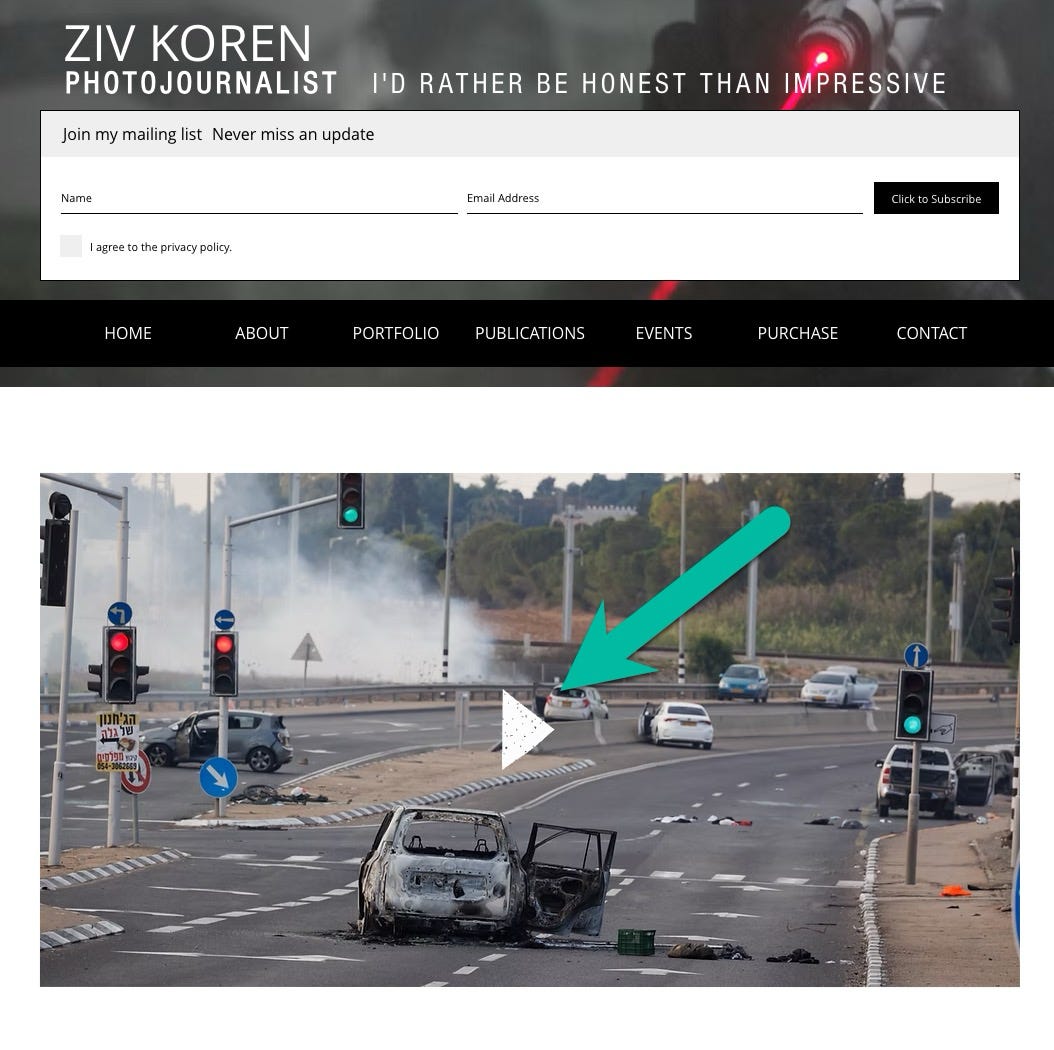
Here is the homepage of Koren’s website. Today, October 7th, start by watching the video on the main page (indicated by the arrow in the screenshot below). The very brief clip above is taken from it, but the full video contains even more powerful footage.
Ziv Koren has a new book, just published, titled Shiva Be-Oktober.
The word Shiva carries a poignant double meaning here. Spelled שבעה, it means ‘seven’ or ‘the seventh.’ However, spelled שיבה—as it is in this volume—it means ‘return.’
Thus: Return in October.
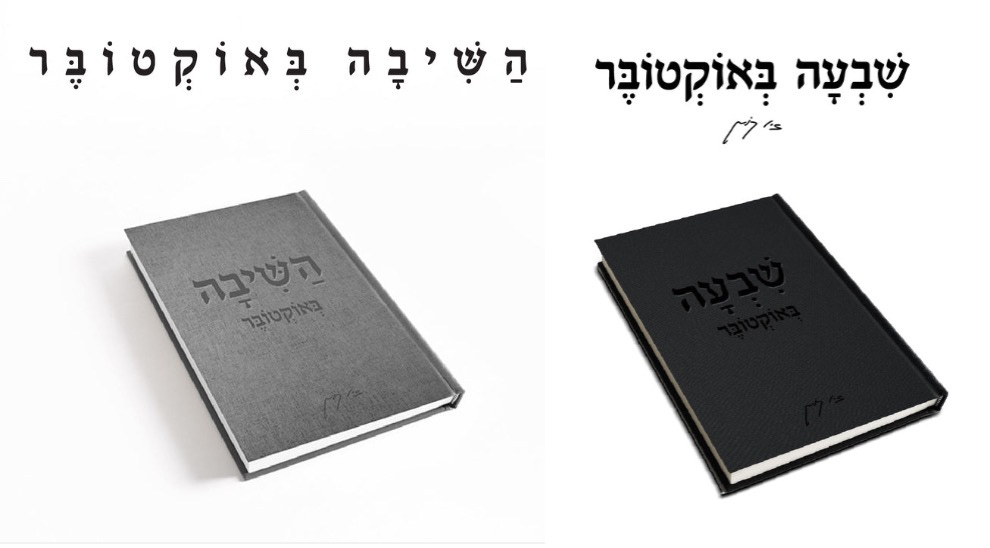
Koren published an earlier volume with the first spelling of Shiva—the black book pictured on the right. It is a stunningly beautiful yet searingly painful work, titled The October 7 War in English, and is available in English on Amazon here.
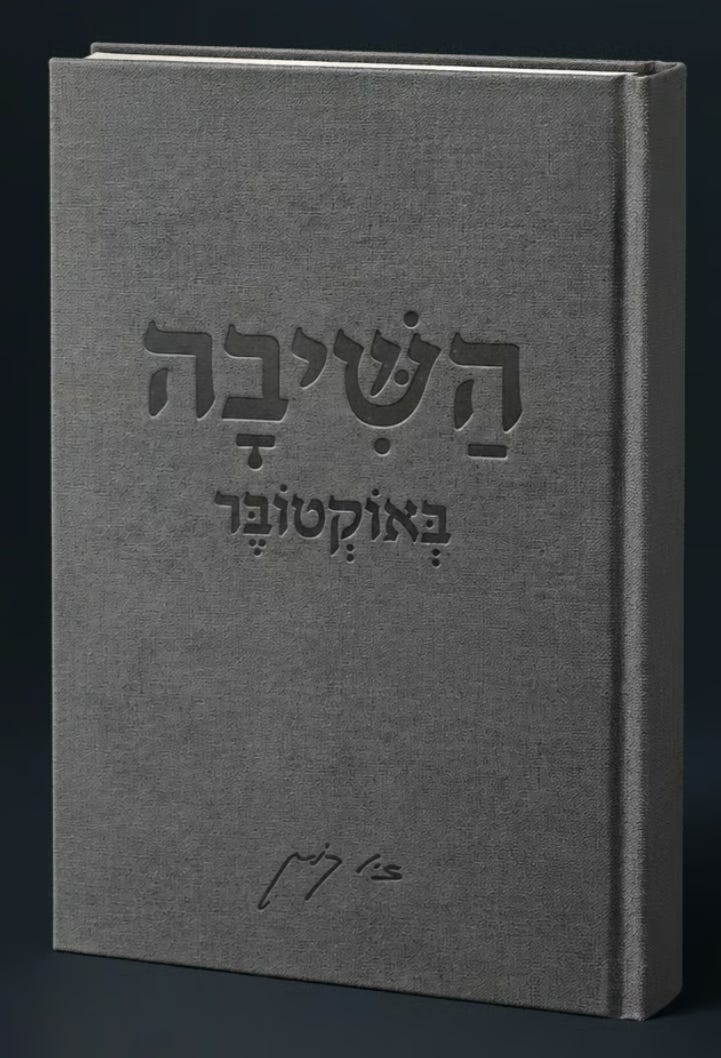
His new book—the gray one below (and on the left, above)—is not yet available in English, to my knowledge. However, YNet published a selection of photos from the book alongside brief accompanying essays (see below).

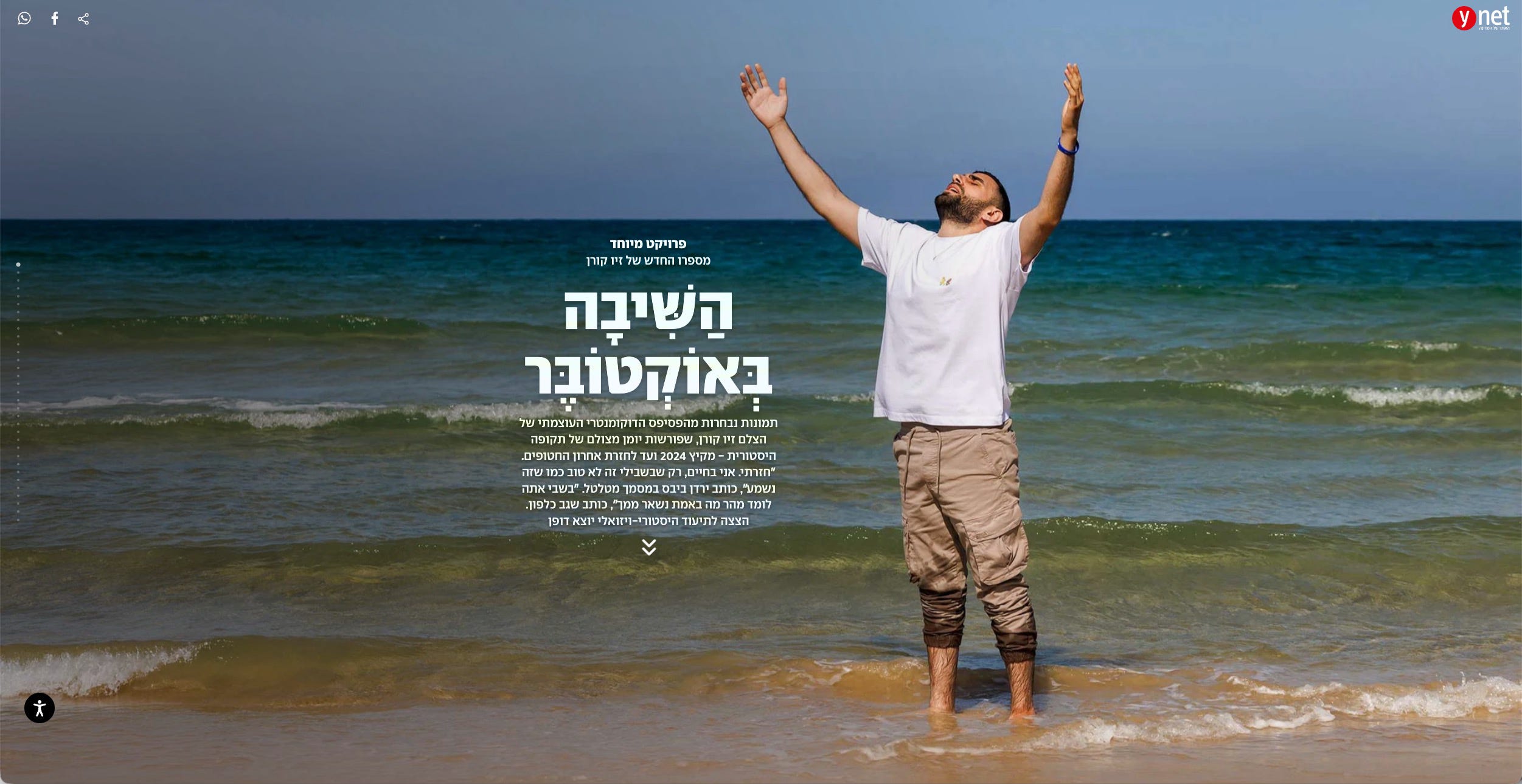
The YNet photo essay can be found here.
Once you’re on the website, you can get your browser to translate the site into English. As you see below in the English translation, the formatting doesn’t always work quite right, but you can still see the photos and read the captions and the accompanying essays.

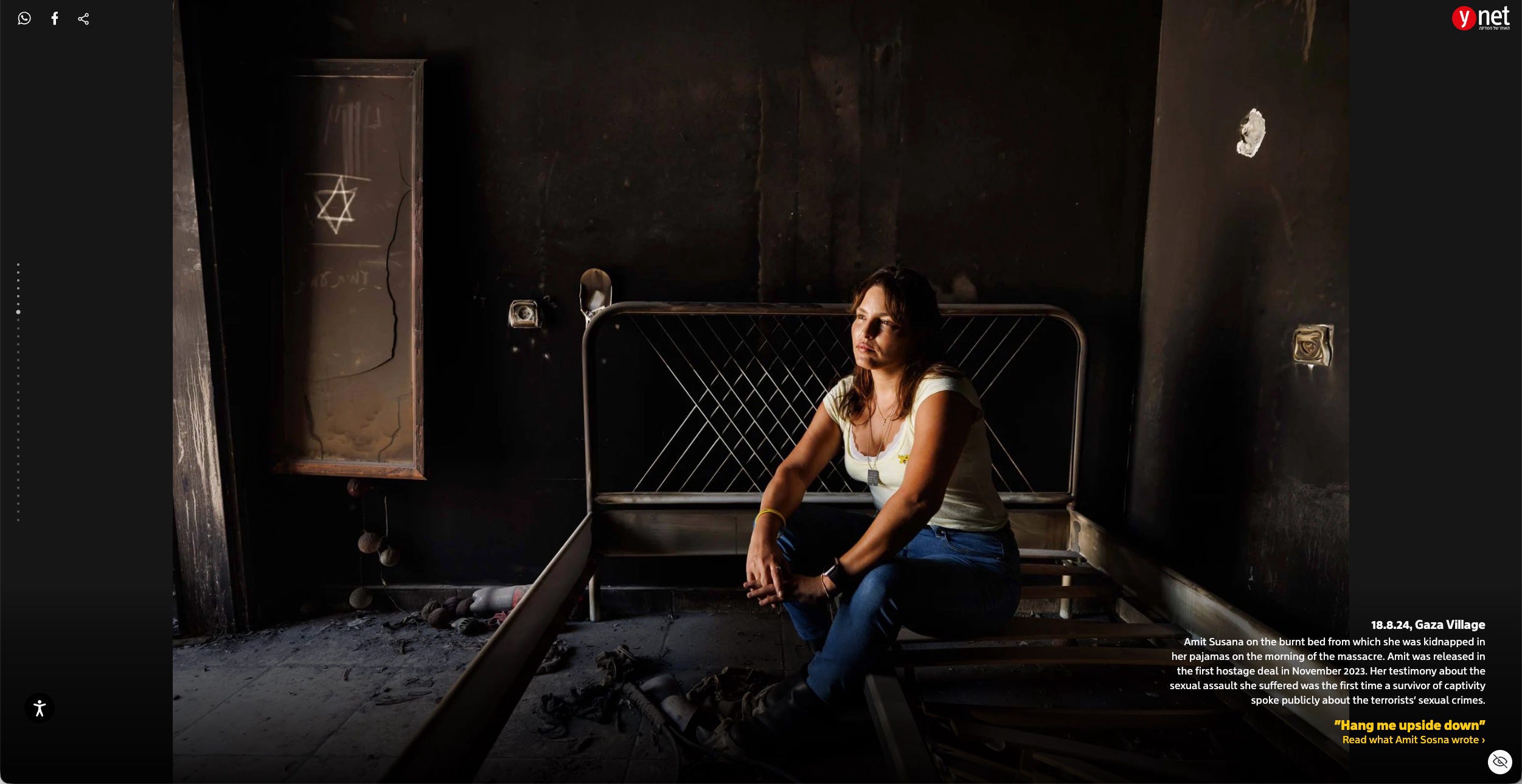
Here, for example, is a Koren photo of Amit Soussana (the Google translation on the website misspells her name).
On the website, there is first the full photograph (which you should absolutely view on a big screen and not on a phone), and then, in the right-hand-bottom corner, a caption.
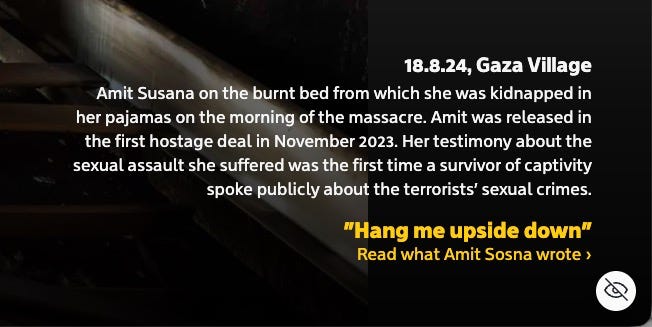
Here, for example, is an enlargement of the caption above. And as you can see, it links, in yellow, to an essay. Those, too, your browser can translate, as below (though the formatting, once again, won’t be perfect).
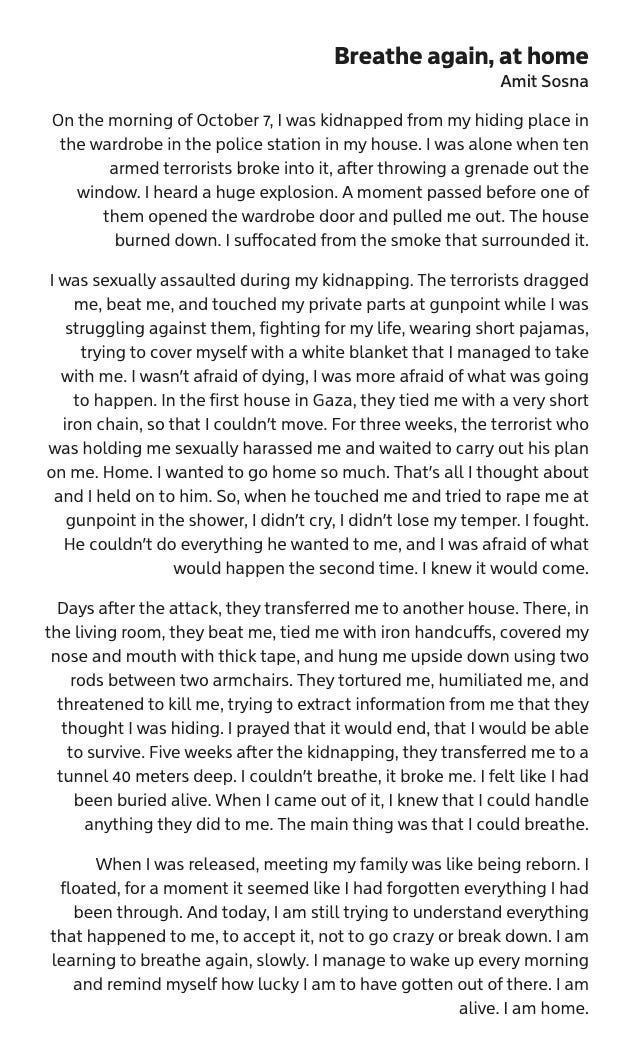
There are about thirty photos and essays in this project, taken from Ziv Koren’s new book.
Today, on an anniversary so painful that it defies words, images are more effective.
Put your phone aside, get to a larger screen, and work through Koren’s stunning photos and the accompanying essays.
I can’t think of a more powerful way to honor this day — and the hundreds and hundreds of innocent people who lost their lives on a day that changed Jewish history forever.


