
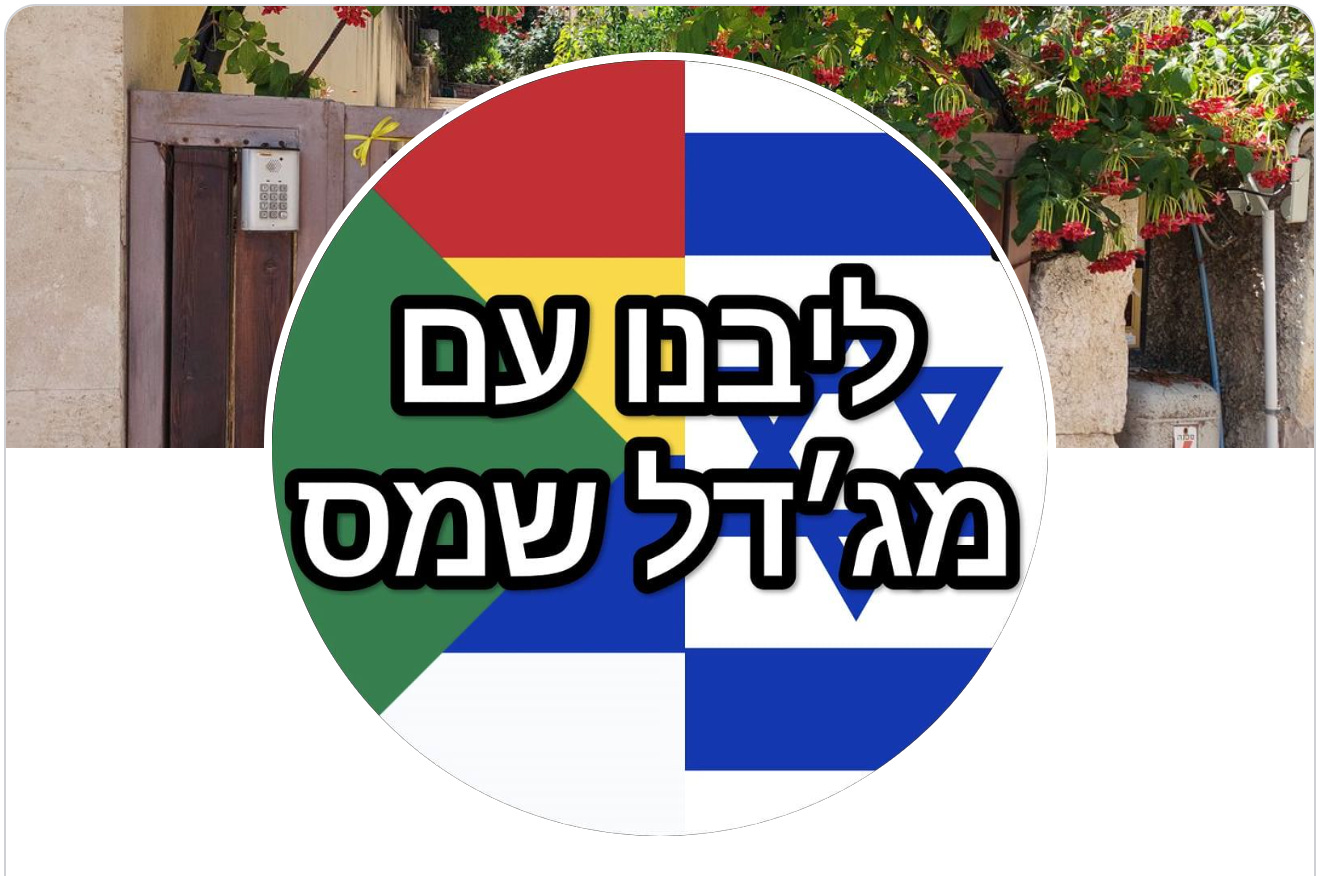
Many Israelis have put this symbol on their social media as a “temporary photo”. The Hebrew says “Our heart is with Majdal Shams.” That, of course, is the northern village/city in Israel, largely Druze, where Hezbollah murdered 12 children. We’ll have more to say about that tomorrow, but in the meantime, even as today’s focus is on the horror of one Jewish family from Be’eri, it seemed critically important for us to note the bottomless pit of pain and anguish that is now the town of Majdal Shams.
May the heavens offers these shattered, broken-hearted parents a measure of comfort with the passage of time.

As we just had a granddaughter born in the States a few days ago, we’ve traveled to spend some time with our kids and the new addition.
So during what is the period of The Three Weeks on the Jewish calendar (the Seventeenth of Tammuz, July 23 through Tishav B’Av, August 13 we’ll be posting at a somewhat reduced rate.
But podcasts for our paid subscribers will continue as usual, and there will be other posts as well.

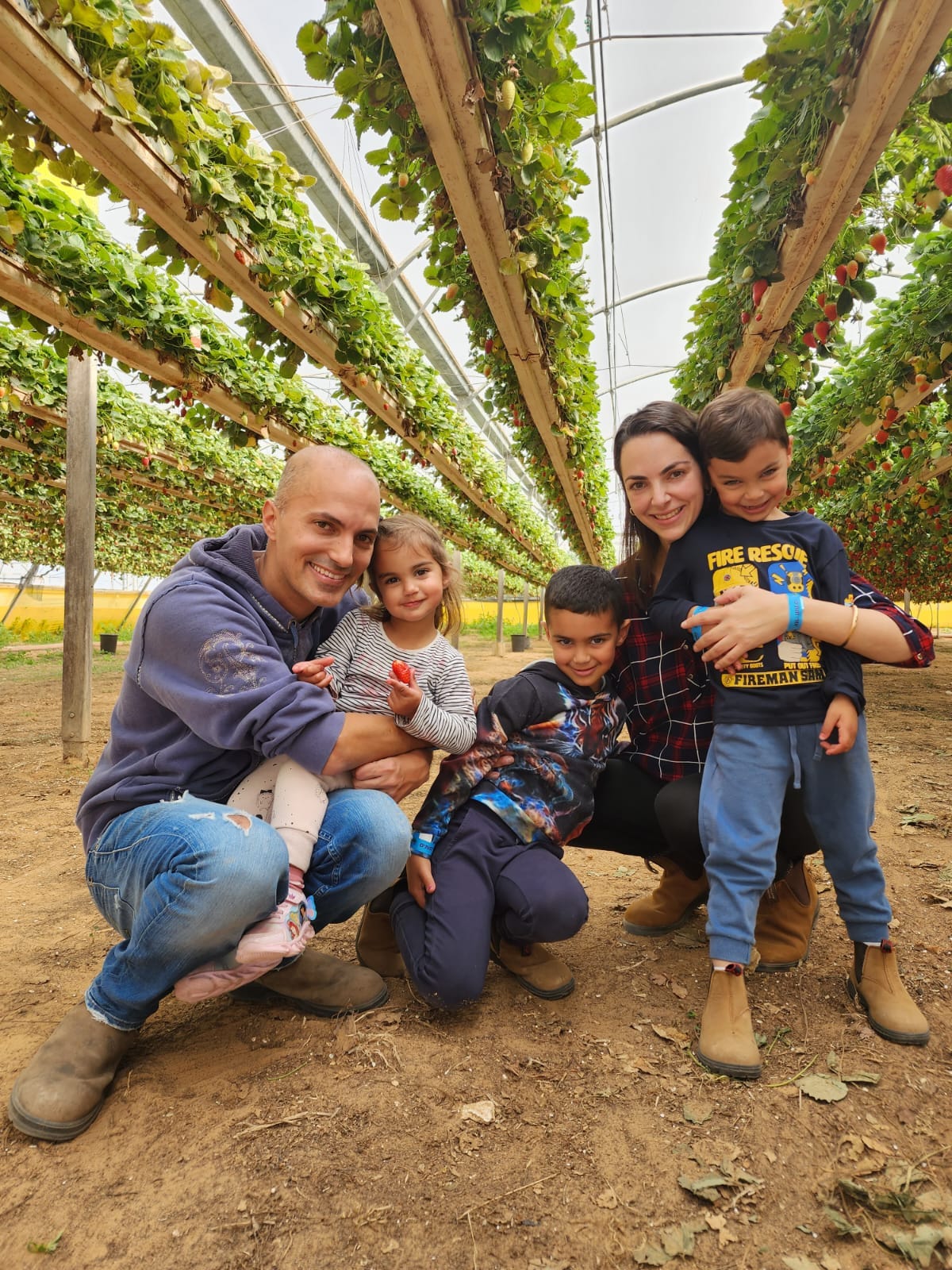
What kind of resilience and reservoirs of strength does it take to survive in your home’s safe room—the door of which you know is not bullet-proof—as you hear shooting, explosions, screams, Arabic and much more right outside your window for hour after hour after hour? What does a young couple (pictured below with their three childen) do with those children when they find themselves locked in that safe room not for 30 minutes, or an hour, or two, or five. But ten, twelve, fifteen?
What does one do when, since you have the metal plate across the single window and the airtight door means that there is not a single ray of light? What does one think about when the phones die, and it doesn’t matter that you don’t have chargers, because in any event, there’s no longer any electricity in the kibbutz? Which means that there’s also no air conditioning with five people in the heat of an Israeli October.
There’s also no water. No food. What to do you when the baby starts to cry that she’s hungry? You hear the terrorists outside your window, so you know they’re still there. And you don’t know why they left your house, and you don’t want them coming back. A crying baby is not good. But opening the door to try to get her food is another terrible option. What do you do?
And when it’s all over, how to you heal? Where do you heal? Can you ever heal? Will these children ever really be OK, ever again? What do you do as a parents when you know that you don’t know the answer to that questions?
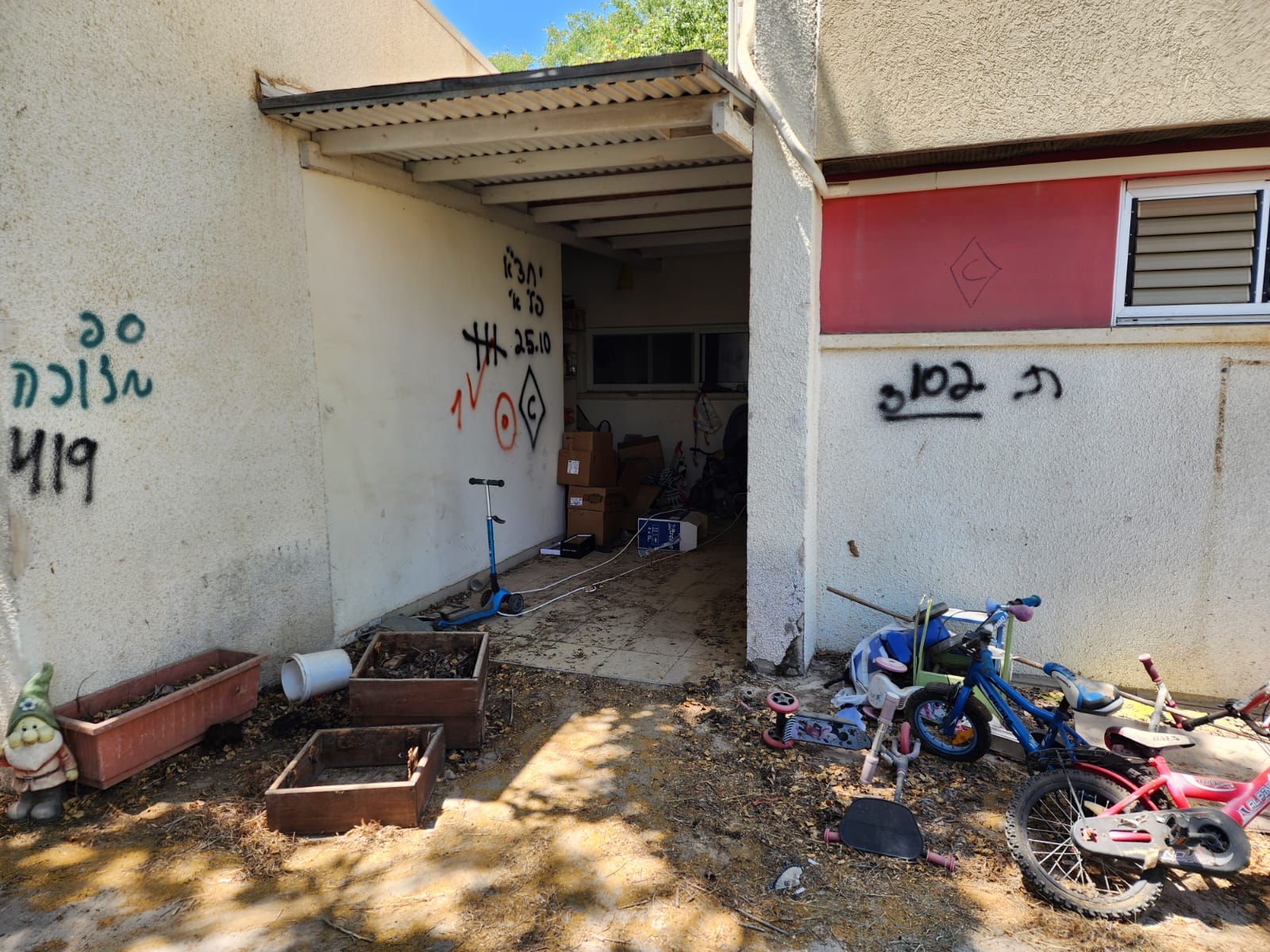
I had the great honor and privilege of meeting Dekel Shalev a few weeks ago; we were put in touch by a mutual friend, David S. Dekel was on a trip from the US to Israel, to go back to the kibbutz and to their house for the first time since the attack, and to tell her story to the media.
It takes great courage to do those things under any circumstances, but all the more so to do so in an language that is far from your native tongue, in which you know that you’re going to be able to share the basics, but not necessarily all the subtleties that are so important to you.
So on behalf of all our listeners, I want to thank Dekel not only for her time, but for the great courage that this conversation demanded of her.
The conversation takes place in two parts. In today’s conversation we’ll hear a little bit from Dekel about her life before the 7th and then she tells us about what she and her family experienced on that black Shabbat.
We will share the second part of our conversation on Wednesday. Today’s conversation, as always, is being shared in full with a transcript for our paid subscribers, with an excerpt made available to all our readers.
For those interested in helping the Shalev family heal and get back on their feet, we’re sharing a GoFundMe page for the Shalev family here.
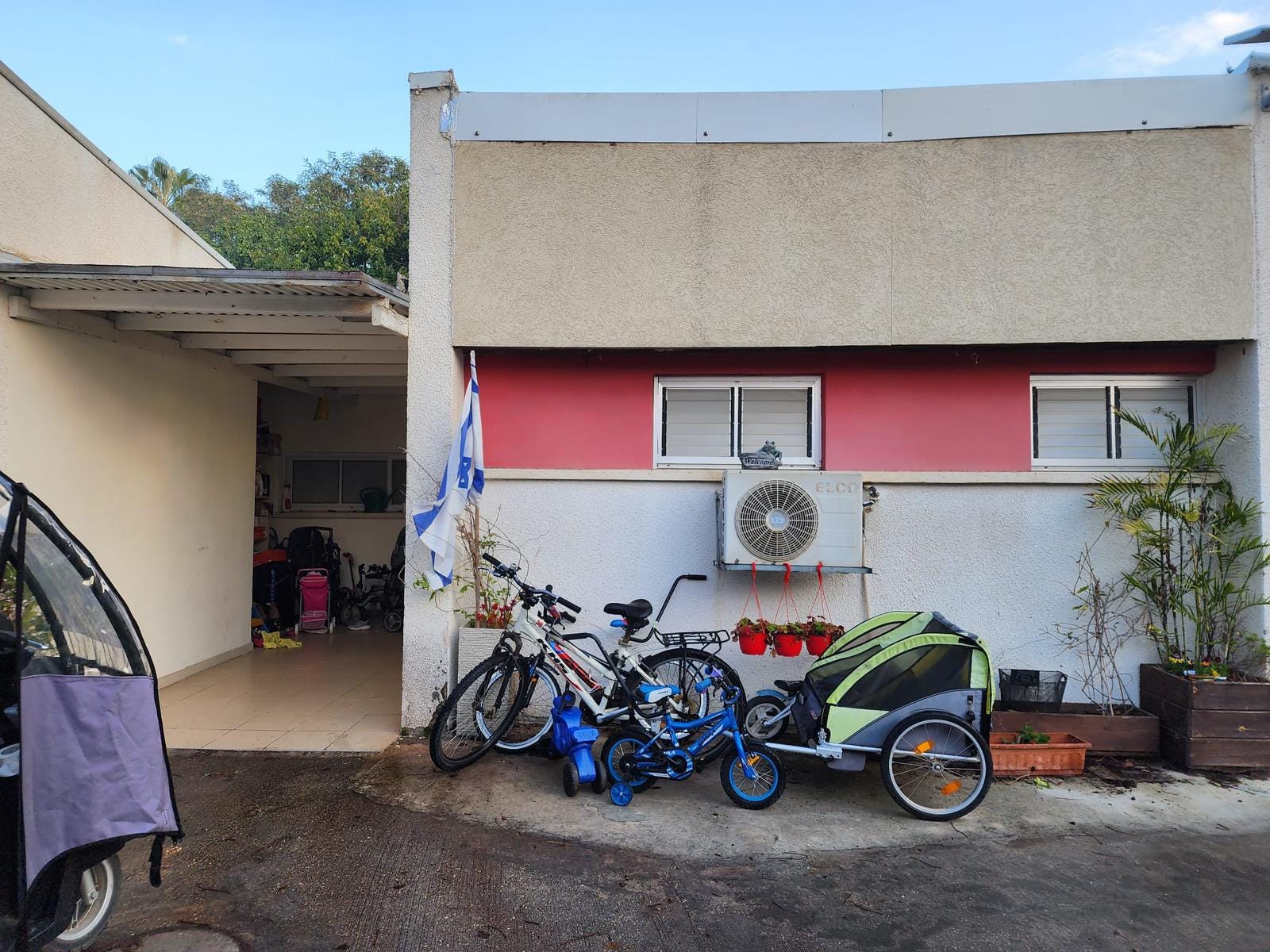
The link at the top of this posting will take you to the full recording of our conversation; below is a transcript for those who prefer to read, available specially for paid subscribers to Israel from the Inside.

My guest today is named Dekel Shalev. She is a person who was a member of Kibbutz Be’eri, was on Kibbutz Be’eri the day of October 7, survived it, thank God, along with her husband and three children living right now in the states. We'll hear more about that a little bit later. She happens to be in Israel for a short while, and a mutual friend of ours put us in touch, and I asked Dekel if she might be willing to just sit with us and talk to us firsthand about what happened and what she experienced and what's happened since.
We've done an inordinate number of conversations and podcasts and posts about October 7, but this is the first time that we're having a conversation with someone who actually lived through it and survived it. So, Dekel, like, I know, I can't even begin to imagine how hard this is to talk about in general and how hard it is to relive how hard it is to just be you at this particular point in the world. So, I'm very grateful on my behalf, on behalf of all of our listeners, for your taking the time to have this conversation. We all understand, I'll just put it out there that you're Israeli, that you were born speaking Hebrew, that English is not your first language. It's very brave to come and talk about it no matter what. To talk about it in a language that's not your native language, I think is even more courageous.
So, on all those very many counts, thank you for doing this. Let's just start out before, talk about the world, what they call, you know, “haolam sh’haya lifnay”, the world that was. Tell us where you and your husband grew up, about your family, what you did all before the 7th.
I am born on Kibbutz Be’eri. All my life I am there. My three kids is born at Be’eri, and my husband is from Kibbutz Yad Mordechai.
Also in the Gaza envelope.
Yes. It's near Be’eri.
Where'd you guys meet?
Shidduch.
Oh, really?
Yeah. I work in the hair salon at the kibbutz, and his mom was a client.
And she said, I have a boy for you.
Yeah. I want you to meet my son.
All right.
So. Yeah.
So, she knew.
Yes.
Okay. So, on the kibbutz, I understand you are kind of the main administrator of the kibbutz. The records and population statistics and all of that.
It was a new job for me after seven years that I worked at the print.
The printing press. Yeah. Be’eri has a very famous printing press.
Yes, I work in the digital albums and stuff. And last year I worked at the…
As the administrator of the kibbutz.
Yes.
And your husband is a chemical engineer.
Yeah, he worked in Beer Sheva.
It's the kind of the national government office of standards, basically. How do you know that something gets a certain approval for being sufficiently safe and all that kind of stuff.
So he every day work at Beer Sheva.
And how long a drive is that?
Almost 1 hour with traffic.
Okay, so about an hour away. Okay, so you're both living on Be’eri. You were born there, he joined you.
I have a sister and my mom's living there. And grandma and grandpa.
And your kids are how old?
And now they are seven and a half, five and a half and three and a half. Yes.
So, almost a year ago it's nine months, so almost a year ago they were about six and a half, four and a half and two. Almost. Okay, so we have a kind of a picture. How long have you guys been married?
Ten years.
Ten years. Wow. Okay, so let's talk, let's talk about the 7th, whatever you want to tell us about how it started, what you heard, what you first knew, what happened, what didn't happen, whatever you're comfortable sharing with us.
So, me and my husband and my two little children, we wake up already and my older son is still sleeping on his bed. The safe room. The mamad, is where he is sleeping.
His bedroom.
Yes. For all the kids. So, we just wake up and few minutes after that, at 6:25, we started to hear shooting and bombs.
So, you heard shooting before you heard sirens?
Yes, all the house is shaking and it something that is not normal.
So, because normally you would hear a siren, right?
Or a boom, but not…
But not shooting.
Yeah, like “tzeva adom” [red alert], but it was just a lot of shooting. And we get inside to the safe room.
Where your son was already sleeping there probably, right?
Yeah, my son is still sleeping, and I need to close the windows. So, I climb up on his bed and then he wake up.
Yes. I want to explain to everybody that the mamad, and we all have this, there's a very thick glass window, but on the outside of the window there's a steel plate and it has rollers and so you can kind of move the plate shut. And the plate is supposed to block, you know, projectiles, pieces of Iron Dome, whatever. So, you have to kind of really lean into it hard and pull it. It's very, very heavy. So that's what you were doing. Because normally you leave it open so there's light and there's air and whatever.
It's always open.
But ours was always open, too, until it wasn't. Okay, then I assume you close the door to the mamad.
So, yes, we close the door, and the siren is beginning, the tzeva adom. And we're just waiting, like, usually, because we are used to the rockets, and…
But you were hearing shooting…
We need to stay ten minutes inside the safe room, and then we…
But you said you heard shooting. Did you understand that?
Not yet.
Not yet.
Not the shoot with the gun.
Okay. Just in the air. Okay. I got it.
We know the sounds.
Right. Of course you do. And just so everybody understands you have to wait in the safe room ten minutes after the last boom, because when the iron dome takes out a rocket, it shreds it into hundreds of pieces of metal. And some of them come down right away, but some of them take their time to float down, and you can get hurt from them. So, people have been actually killed from them. So, everybody knows you have to wait ten minutes until the last boom. So that's what you were doing.
So, we are waiting, and then we get on the phone a message from the kibbutz that they have a “hashash”
A suspicion, they're worried about. Yeah.
Yeah.
That there's a concern about a possible infiltration of the kibbutz, that somebody got through the perimeter of the kibbutz.
And so, I told my husband that the door is not closed. And we need to go to lock the doors. We have two doors, front and from outside. And my son told me that you need to go to the bathroom because we didn't eat yet and we didn't go to the bathroom. So, I took him, my son, with me to go to the bathroom, and I locked the door. And then we come inside to the safe room again, and we just lock the door. And when we moved to this house before, like, seven years ago, and we put another lock that it's not included…
It's not normal for the safe room.
Yes. We just added a special lock. Yes.
And did your husband, did either of you have a weapon with you?
No, we didn't.
You didn't keep a weapon in the house?
No.
Okay. Because some people did. In other kibbutzim there were definitely people that did. Okay, so you didn't have any way of really protecting yourselves other than being in the mamad.
Yes. And we didn't know that it's go. So, we didn't take any food or water.
So, you get this message from the kibbutz that they're worried that there may have been somebody that got through the fence.
Yes. And later we started to hear the shooting inside the kibbutz.
Guns this time.
Guns, yes. And we started to understand that it's not like usually. And we need to start to explain the kids, because then they start moving and we want to go outside. And they are bored, they want to watch TV and all the stuff that we do in Shabbat. And so, when we started to hear, like, yelling and to understand that they coming closer to our neighborhood…
You were hearing yelling in Hebrew or Arabic?
Just a lot of yelling, like, a lot of noise. And they just come, and I make party inside the kibbutz. And they took a lot of cars and put music outside like they come to party.
The terrorists put on music?
The terrorists, of course. Yes, inside the cars. They took cars. They steal cars and put music, and it was very loud. So, yes, they just come to make party on us. And so, then I just start to explain my kids that if they cry or make noise, they will come to us, and want to out us. So, I think then they understand us because they starting to hear the shooting and ask, what is that?
Were they crying?
Yes, in the beginning because they want to go outside.
Okay.
So, yes, but then after…
Were they scared? What do you think they felt? I mean, the young ones, very, very young. He or she, the young one.
She.
So, she was a little bit over two, so she probably didn't understand.
Yeah, but after I said that, they all, all of them stopped to cry. Stop the crying and just be quiet. And they got inside the bed and put the blanket over their head.
And I assume this whole time you and your husband are probably on WhatsApp or whatever, texting to people in the kibbutz?
So yes, because the little girls started crying so, we gave the phone of my husband to watch YouTube and videos, and I was with the phone and connect to the WhatsApp group of the kibbutz. And it's a group of moms, very big group of the kibbutz, and some moms starting to write that they have people inside their home and starting to make fire or shooting on the doors or the windows. And then they coming to us like twelve noon.
So, wait a minute, before we get to twelve noon, you got into the mamad about what 7:00?
6:25.
That's when you first heard.
But we never just locked the door.
And to go to the bathroom quickly for the kids. Right. Okay.
Just one of them.
Yeah. Okay, so 6:25. So you're talking five and a half hours.
And that we heard them outside...
But before we get to 12:00, I'm saying you and your husband and your kids are in this room for five and a half hours so far. No food?
No.
No water?
No.
I assume you had a charger for the phone. I guess.
No, we didn't.
Okay.
We didn't have nothing. Because when we get the first message, we just think about, like, okay, two, three people…
And then somebody is going to take care of it, and it'll be over.
Yeah. And it's over.
So, I'm just trying to understand, to be with three kids in a room for five and a half hours before things really even start. They were just lying there? They were talking, they were playing on the phone? They were worried?
After we started to hear them outside, inside the neighborhood, they just understand that they can’t speak, and they was in shock.
They just lay there or sit.
Yeah. 15 hours.
Yeah. Well, yeah, we're going to get to the 15. Now there's no food.
Yes.
There's no water. Were they saying that they were hungry or thirsty?
Later.
Later. But not for the first five and a half hours. No.
No, they just understand that… yes.
“Ein ma laasot” [there’s nothing to do] as they say. Okay. So around 12:00…
We just heard the terrorists broke in the windows and the doors. After that I figured out how they come inside. They took a table, kids table from outside, and they threw it. Threw it on the windows. And then the window is broken, and…
And then they opened it up and they came in the house.
Yes.
You have no way of knowing how many there were, obviously right because you couldn't see?
No, but…
A bunch.
A few, yeah.
And did they try to open the door to the mamad?
They try open the door and…
But you had that special lock, right?
Yes, but the window was not locked. So, it's just…
Were they trying to open? Were they trying to open the plate of the window?
No, this is what… They just try to open the door. And our luck that they didn't shoot on the door because it's not bulletproof. Some people killed when they…
Yeah, but they didn't shoot your door.
No, just they took a lot of clothes and games from the kids and zarku....
They threw them.
They threw them on our doors because they tried to… after that, we understand that they took inside a lot of houses they took clothes and stuff and put it on the doors safe room and…
And then they were going to light it on fire?
Yes.
And they did light it?
No…
We just don't know why.
No. And they steal all of the computers and the iPads and all the electronic things, and all my jewelry and money.
And then they left?
No, they come back like four times inside our house.
And what are you hearing on the WhatsApp group from other people at this point?
That they burn alive and they “rimonim”…
Hand grenades.
Yes. A lot of things on the WhatsApp. My neighbor sent us that her baby is killed. And I didn't understand that just after that day, but a lot of things. And when they come inside our house at 12:00, all the electronic, electricity, it's gone.
It went down. Yeah.
So, we didn't have mazgan…
Oh, so there's no air conditioner, there's no fan.
No light, no nothing.
So, it's pretty dark in that room now too?
Dark and very hot. No air. And we started to sweat. And the kids sweating.
And what are the kids doing at this point? I mean, they're hearing people outside. They're hearing screaming.
They were sleeping.
They went to sleep?
Yes. And they didn't…
All three of them went to sleep.
Yes. It happened in a lot of homes. Yeah, the kids just, and the dogs that was like when a person is coming so suddenly they…. everybody was quiet.
And the dogs were quiet too?
Yes.
Wow. So that's, I just find that, I didn't know that. And I have to say that's so fascinating about the human mind, that these kids knew the best way to survive was just to go to sleep.
They go to sleep like three times in that 15 hours. And in that age, like seven years old, they never sleep at noon…
So, you and your husband are in the room, obviously, and your daughter goes to sleep. He takes his phone back, I assume, so he can look back…
Yeah. He didn't have a battery this time because she watched.
So, you have one phone now?
Yeah, just me. And then my phone is dead because I was a lot of hours…
Right. And even if you had a charger, there was no electricity anyway.
Yes.
So, what time did your phone die?
Like one or two.
So about halfway through, I guess about half.
Yeah, I write on the WhatsApp group or on the WhatsApp family that the terrorist inside our home. And then my phone dead. So, they think… Yes. It was a lot of hours after.
So, a lot of hours after that of no phone, no air conditioning, no fan, no light, no food, no water, no bathrooms.
Yes. If we need a bathroom so I took a bag, plastic bag and yes, but it was…
Not simple, let's put it that way.
Yes. And the kids saw everything and the smells. And about 02:00 p.m., after the terrorist left and we thought that it's little bit more quiet. And Daria, my little girl started to cry that she hungry, she want food the first time at the day. So, she started start to yelling that she hungry. And the boys is getting nervous that she's making noise. So, it was too much. So, me and my husband spoke with each other, and we just say, or she is crying and yelling, and they come to us because we heard them outside or we go get some food. So, we waiting a little bit, that will be more quiet. And then we decided that I'm going to watch on the door, and Oshri go out to bring something. We don't know even what we have inside the fridge. And then Oshri go outside. And then we saw all the clothes and the stuff on the door. So, it was very hard to open the door because all the clothes and I just open a little bit and because I want to close the door immediately. And then the smell is coming inside to the safe room like a terrible smell.
What was the smell of burning or?
Burning and like death. I don't know how to say that, like sweat and fire and a lot of things. So, Oshri come back with grapes and milk and he come inside again.
Did he bring any water?
No, he just…
Took what you could.
Yeah, milk and grapes. And they just the kids eat grapes and it was okay. And then they go to sleep again because what do we have to do?
How long was he out, would you say, of the room?
How long?
Yeah, like two minutes, five minutes?
When Oshri get the food… a few…
Two minutes?
Yeah.
And then you came back in and closed and locked the door?
Yes.
So, now we're about 2:00 p.m. or something like that.
Yes. And then the kids go to nap again. And then we think that the soldier came our house the first time at 4:00.
Did they call out to you? Did they say, is anybody in there?
Yeah. This is why we think it was soldier. We don't know who it was, but it was different from the beginning, like…
But did they call out, like in Hebrew.
Yes. “Who is there?” They ask if we have kids inside. So, we think it was different. So, Oshri say that we have three kids inside. And then the kids wake up because it was very loud and they start crying and the soldiers just say, don't come out.
Could you still hear shooting in the kibbutz at this time?
Yeah, all the time.
The whole time.
All the time.
Just huge gun battles?
All the time.
So, the soldier said to stay in there and not come out.
Yeah, don't come out. Just stay inside. And they left. And we don't know what was the time or what happened now?
Do you have any understanding? I mean, I don't know the layout of where you were.
Just after that, when the soldier came to Yam Hamelach, to the Dead Sea, to the hotel and explain us, but no, we didn't know what was going on.
So, in retrospect, why did they not get you out then? They couldn't. It wasn't safe?
So after, like one month, when they came to our hotel to explain and we talked with the people, they say that the system was that they going to, like, one neighborhood.
They were going to clear out one neighborhood at a time?
Yes. And they moving. But after they left, the terrorists come again.
They came back in?
Yes. So it was, there was a lot of terrorists and all over. And, yes, it's. I don't understand it, but this is what it was.
And so now we're in the middle. What time did the soldiers first come?
I think like four, because everybody say this was the time that the soldiers came.
All right, so you're now talking, you've been in for nine and a half hours, approximately.
Yes. I didn't know what the time is, so I just told the kids, its evening, it's night. Go to bed, go to sleep again. Cause what we can do?
Right. And it's dark in the room still, right?
Yeah, completely dark.
Right. Because there's no light, there's no windows.
I didn’t know if it's afternoon, if it's night. And so, I just tell them again, go to sleep. Just, I didn't want that they hear...
Sure.
And then at seven at evening, soldier come to our home, and they said that our house is starting to get on fire, so we need to come out. Go out. And we said that, no, we don't go out because we don't know if you are a terrorist. Or if you are a soldier. So, we just ask him question, what's your name? Where are you from? What is your number?
Mispar ishi, it’s your army number.
Yes. And I asked him to bring me the card of the soldiers mispar ishi.
Well, how were you going to see it, though? The door was closed.
So, it just wasn't in my mind. And then I heard them say to each other that they don't have the cards. So, I told Oshri no…
But they were talking to each other in Hebrew, right?
Yes. But what is the soldier without the card? So it was like red flag. So, it was, I don't know how much time, but I think few minutes, like, question. And come outside. No, we don't. And then they said, if you don't come out right now, we go to another house. So, I said, okay, I can't, I can't. The soldier is coming. And go again. And then we decided to open the door, and it was three soldiers.
And this is what time?
Seven. But this is, I figure out afterwards because they took us to another house.
So, they couldn't get you out of the kibbutz yet. Was your house actually on fire? The next house over?
Yes.
Was on fire?
Yes.
And did your house eventually catch fire or no?
No.
At least that. Okay. And they took you to a house. How far away would you say?
So, it was very messy. Like, the soldier looked so confused and, like I asked him, where are we going? And they said to the first house on your neighborhood and say, okay, so we have three kids, and we are two parents and two soldiers beginning to run outside. And they, like, wait for us. Like, what are you doing? I don't know where I'm going. And there is shooting outside. And a lot of tzeva adom [red alerts]. And I just told my older son to run after the soldier. And I took the little one and Oshri took the middle one.
So, we running after the two soldier and one was behind us. And they said that we going to the first house. And then I look at the first house and it was on fire. So what? Where are we going? And he didn't know to say because soldier didn't know the kibbutz. And we just ran after the soldier. And, like, two times they said to us to just lay down on the road and because the shooting, it was a lot of shooting on us.
So, while you were going, they wanted you to lie down on the road while you're on the way to this house?
Yes, yes.
To take cover, basically.
Yes. And then [in Hebrew]: I don’t know how to say, bakbukei tavera….
Yeah. molotov cocktails. So, they actually landed near you?
[in Hebrew]: al haraglayim.
On your legs.
We needed after that to [in Hebrew]: lohatzi zichochiut mi’haraglayim…
So, you had to get pieces of shards of glass out of your legs from the bottles.
Yeah, because we run like with pajama without nothing. And so, they took us to another house, not in my neighborhood, but next one. And just so that it's our friend and we know who is living there. And you just screaming that, open the door. It's me. And then they opened the door, and it was electric…
They had electricity there?
Yes.
And they were not in their mamad? They were in the regular house, or they were in the mamad also?
No. Everybody was in the safe room.
So, they came out of the mamad and went to their door. Or you went into the house inside?
No, we were inside the house.
And then you knocked on the mamad door?
Yes.
How many were they?
It's family with three kids…
So, then you were ten people in the mamad.
And one couple without kids.
So, twelve people in the mamad. And now again, with the door closed. But they at least had air conditioning now, right?
Yes. And the kids they put like movie on the computer, and it was the first time that we drink, like water…
So, after 12 hours, 13 hours.
Yes. And then I charged my phone, and I saw that it's 7:00, so then I know what the time. And when I opened my phone again, it was like thousand…
Messages. WhatsApps?
Yes. And my mom…
Where was she during this?
My mom is from Kibbutz Be’eri.
So, she was in a different neighborhood in the kibbutz?
Yes. And she text me that they waiting for us on the shetach kinus.
Yeah. The area you gather, the assembly area.
Yes, from 4:00…
From 4:00 they were waiting for you?
Yes. And I didn't understand what, how it could be that some people is getting outside, at like 4:00, and now it's after seven. And the soldier just told us, just wait here inside the safe room, and we come to get you, take you outside from the kibbutz. So, we were there 2 hours more.
Till nine.
Until nine…
Okay, so the volunteers came and showed up at the house.
Yes. And they took all, we were like 14 people inside the safe room. They took outside to the grass, and military jeep is coming on the grass. And they told us that women and kids go to this jeep and men to the other one.
Why?
Cause if something happened and just because we was a lot…
Why did they divide it up by gender? Why not say, this family go here, that family go there? I mean, I’m just curious.
Because they just want to. The woman and the kids go to get out fast. And then come another one. And then…
Oh, I see. They weren't both there. There was only one jeep at the time.
One, yes.
So, they took the women and the kids out. Then they came back and another jeep came and got them in. Got it.
In this time, they took another family when mom and three more kids inside the jeep. So, we were like 19 people inside a small jeep. And the kids.
And they took you to the shetach kinus, to the assembly area, or where did they take you?
Yeah, it's just outside the kibbutz. It's the area of Be’eri.
But outside the perimeter.
It was. Yes. The kids were screaming and…
No, I can't even imagine. So, at this point, are most people already evacuated from the kibbutz? When you get there at 9:00, are there most people there or there still people stuck in the kibbutz?
There was a lot of people outside already, but not everybody.
People were still stuck in the kibbutz. And did you know at this point that kibbutz people had been taken hostage to Gaza?
I didn't know anything. I just know that one people is killed, and they have some people that were pitzuim [wounded].
Okay. So, you heard that one person was killed, and you knew that there were some wounded people?
Yeah, I didn't know about...
Well, there was 101 people killed. Right. And how many were kidnapped?
Kidnapped? Eight or ten.
Okay. Eight or ten people kidnapped.
Now…
Now, after the exchange. How many were taken originally?
20 something.
20 something. So, some of them, most of them got out in the first exchange…
[in Hebrew]: o sh’matzu et hagufot…
Or they found their bodies. Okay. Where did you sleep that night?
We was 2 hours more outside the kibbutz.
So now it's 11:00 and there's still battles going on in the kibbutz. You're still hearing shooting, or is it stopped?
Yeah, no, we just was on the ground. Everybody…
Lying on the ground. And the kids are not sleeping, I'm sure.
No.
They screaming or they terrified?
Yes, a lot of screaming, a lot of crying for everybody then adults and the kids. Everybody.
And the soldiers were with you or no?
Yes. But you didn't…
You were on your own. You didn't feel taken care of?
No, no. And in the beginning, they said that a bus need to come and take us. And then they understand that nobody is going to come to this area. So, they started to talk about the truck with…
Yeah, yeah. A transport truck. Yeah.
And just the thought about like, like what we are…
So, you're, you're with your mom at this point, right?
Yes.
And you're with your sister?
No, my sister got to hospital. It's another story.
Another story. Okay. And sometime that night they take you where?
So, the military start to take us with the jeep to Netivot. So, from Be’eri until Netivot we just sitting open jeep and we saw all the rockets behind our heads. And yes, about almost 12:00 we get to Netivot.
And you have nothing with you, right? You have no clothes, no pajamas and nothing?
Nothing. And then they told us that bus is coming, two busses. And they took us to the Dead Sea, to the hotel.
That night already?
Yes. It was late at night.
Wow. So first of all, I mean, this story is, I don't know how to say “mezazea” in English, it's just horrifying, shocking, whatever. I'm also, you know, I'm trying to, as you're telling the various times during the day. So, I’m trying to remember what we were doing, like literally five minutes from where you and I are sitting now. My house is right near my office. We were in the mamad, we were out of the mamad, we heard the sirens, we went in, we came out and we were thinking like, what's going on? And we had no idea that an hour away…
In the news, they didn't say anything.
Nothing, nothing. And an hour, well, they also didn't really know, but I mean, we just, when I even think about it now, so we thought it was crazy. We're going in the safe room, out of the safe room, in the safe room, out of the safe room. And we heard explosions in the skies. But we didn't know that there was absolute hell, I mean, absolute gehinom an hour away.
So, when you know that...
The numbers kept going up. Don't forget, there was also the Re'im, right. So they said at first, you know, 50 people were killed at a music festival. Then they said 100 people. How could it be a hundred people killed? I mean, this doesn't... Whatever. Obviously, we were completely. So it gradually dawned on me.
It reminded me of years and years and years ago when I was in England during the gigantic tsunami that happened in Thailand. And we were on a bus from London to some university campus. And the bus would stop like once, this is before cell phones and all that. So, the bus would stop like every hour, every 90 minutes for people to go to the bathroom, get a snack, whatever. And then we would see the TV in the little restaurants for the gas station. And the numbers had gone up by like, you know, a thousand, another 5000, another 10,000. It reminded me of that, like, every time you look back, the numbers were crazy.
So, first of all, I just want to thank you for reliving that in your memory a little bit. I mean, I know you're doing it a lot because you're in Israel this week. So, I want to stop with that and begin to think about your life after that day.
Music credits: Medieval poem by Rabbi Shlomo Ibn Gvirol. Melody and performance by Shaked Jehuda and Eyal Gesundheit. Production by Eyal Gesundheit. To view a video of their performance, see this YouTube: